
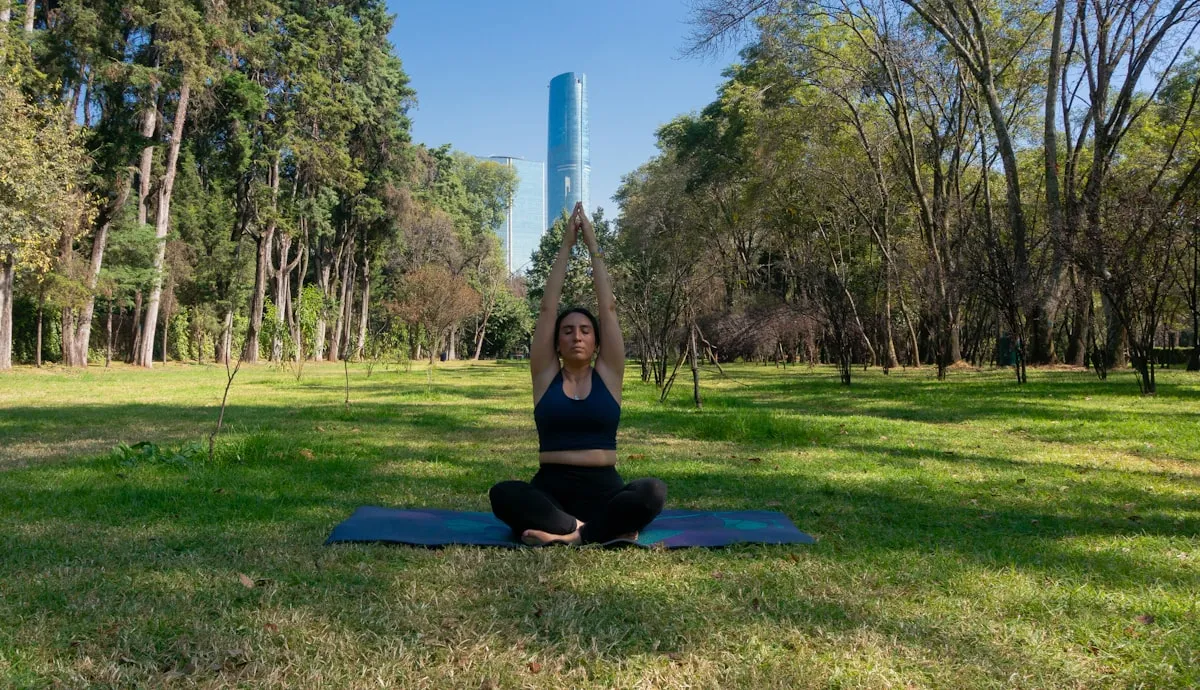
Stress doesn’t just live in your mind. It takes up residence in your body — in the tight knot between your shoulder blades, the clenched muscles of your jaw, the shallow breathing that you don’t even notice anymore because it’s become your default.
Your body keeps the score. And one of the fastest, most effective ways to release that physical accumulation of stress is through movement — specifically, the kind of slow, intentional, breath-connected movement that yoga offers.
You don’t need an hour. You don’t need a studio membership. You don’t need to be flexible, athletic, or experienced. The five poses in this article can be done in 10 minutes, in your living room, in your pajamas, by someone who has never set foot on a yoga mat.
These are not advanced postures. They are simple, accessible shapes that your body already knows how to make. What makes them powerful is the combination of physical release, conscious breathing, and present-moment awareness. Together, those three elements create a rapid downshift from the sympathetic nervous system (fight or flight) to the parasympathetic nervous system (rest and restore).
In plain language: these poses tell your body that you are safe, and your body believes it.
“The body benefits from movement, and the mind benefits from stillness.” — Sakyong Mipham
Let’s get into them.
Pose 1: Child’s Pose (Balasana)
Hold time: 2 minutes
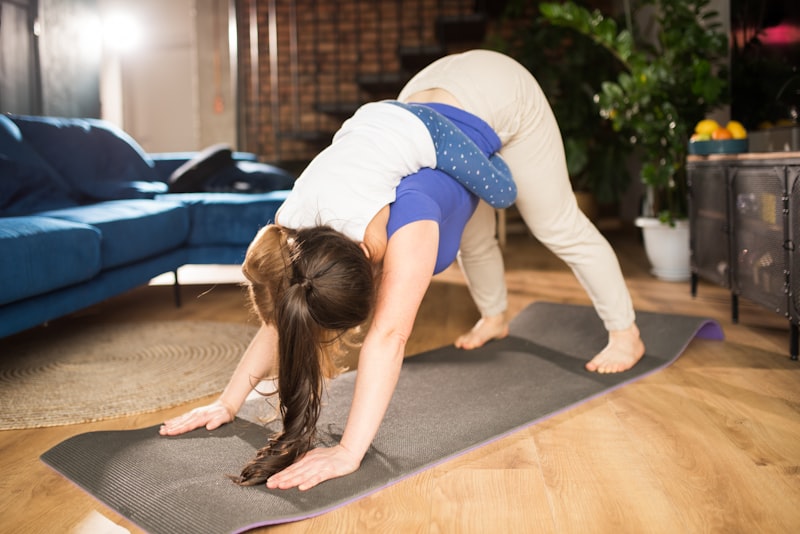
Child’s Pose is the great equalizer of yoga. It is both a resting position and a deeply therapeutic one. When your forehead touches the ground and your body folds inward, something primal happens — you are, in essence, returning to a fetal position, which signals safety and surrender to your nervous system.
How to Do It
- Start on your hands and knees on a comfortable surface — a yoga mat, a carpet, or a folded blanket.
- Bring your big toes together and widen your knees to about hip-width apart (or wider, if that feels better).
- Sit your hips back toward your heels. If your hips don’t reach your heels, that’s perfectly fine — just go as far as is comfortable.
- Walk your hands forward on the floor, stretching your arms out in front of you. Let your forehead rest on the ground.
- Close your eyes. Let your belly soften between your thighs. Allow gravity to do the work.
- Breathe slowly and deeply. With each exhale, see if you can sink a little deeper into the pose.
What It Releases
Child’s Pose gently stretches the hips, thighs, and lower back — three areas where stress commonly accumulates. The forward fold also creates gentle compression on the abdomen, which stimulates the vagus nerve and promotes a calming response throughout your body.
Modifications
- If your forehead doesn’t reach the floor, stack your fists or place a pillow under your forehead.
- If your knees are uncomfortable, place a folded blanket behind your knees for cushioning.
- If sitting on your heels hurts, place a pillow between your calves and thighs.
- For a different arm variation, bring your arms alongside your body with palms facing up instead of reaching forward. This is even more restorative.
Pose 2: Cat-Cow (Marjaryasana-Bitilakasana)
Hold time: 1-2 minutes (flowing between positions)
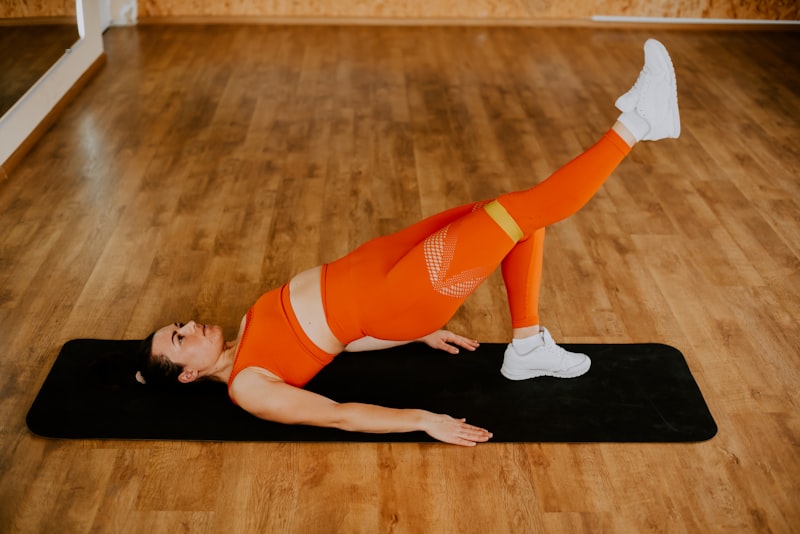
Cat-Cow is technically two poses linked together by your breath. The gentle spinal flexion and extension create a wave-like motion through your entire spine, releasing tension that builds up from sitting, standing, or sleeping in less-than-ideal positions.
How to Do It
- Start on your hands and knees in a tabletop position. Wrists directly under your shoulders, knees directly under your hips.
- Cow Pose (inhale): As you breathe in, drop your belly toward the floor. Lift your chest and tailbone toward the ceiling. Gently lift your gaze without crunching the back of your neck.
- Cat Pose (exhale): As you breathe out, round your spine toward the ceiling. Tuck your tailbone and draw your chin toward your chest. Press the floor away with your hands. Imagine someone is pulling a string attached to the middle of your back, lifting it skyward.
- Continue flowing between these two positions, matching each movement to your breath. Inhale into Cow, exhale into Cat.
- Move slowly. This is not a speed exercise. Let each transition take the full length of your breath.
What It Releases
Cat-Cow mobilizes the entire spine, from the base of your skull to your tailbone. It releases tension in the neck, shoulders, and lower back simultaneously. The rhythmic movement also massages the organs of your torso and helps improve circulation. Perhaps most importantly, the synchronization of breath and movement anchors your attention in the present moment — there’s no room for anxious thoughts when you’re tracking the wave of your spine.
Modifications
- If your wrists hurt in tabletop, make fists and rest on your knuckles, or come down to your forearms.
- If your knees are sensitive, place a folded blanket beneath them.
- To deepen the stretch, make your movements bigger — really exaggerate the arch in Cow and the rounding in Cat.
Pose 3: Legs Up the Wall (Viparita Karani)
Hold time: 3 minutes
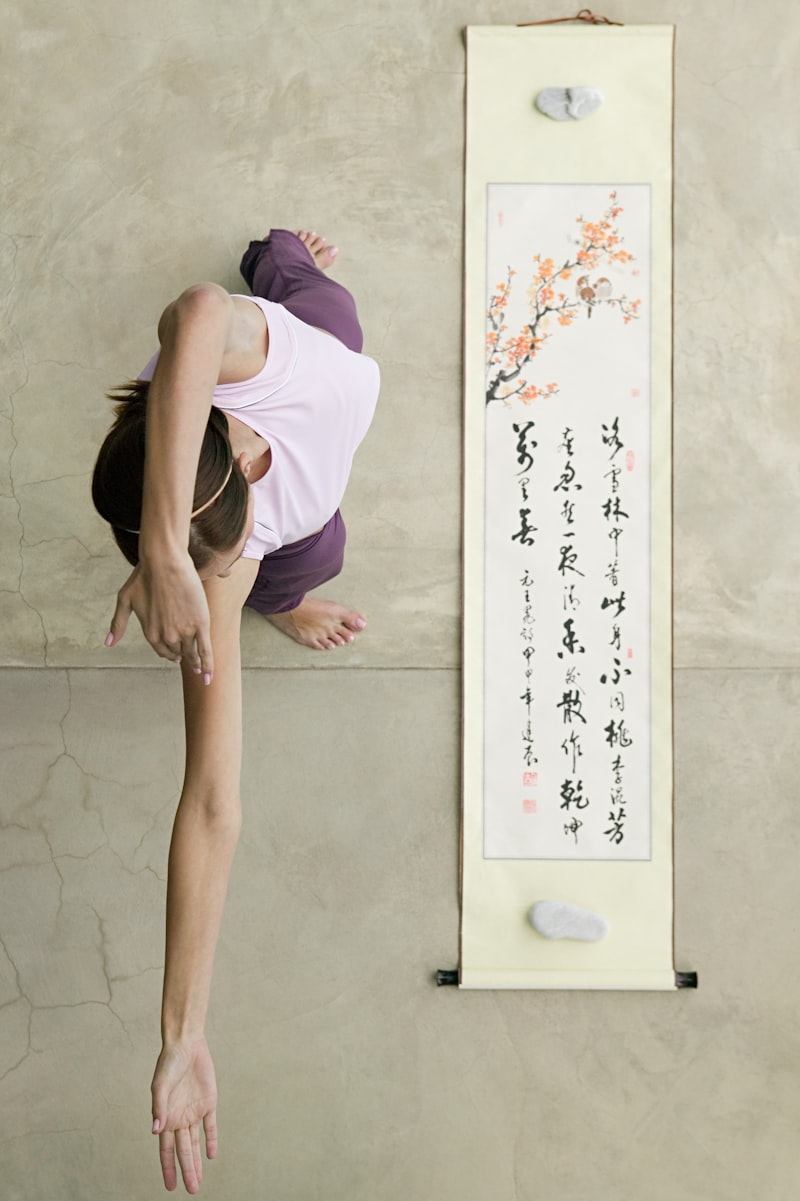
This is one of the most profoundly restorative poses in all of yoga, and it requires almost zero effort. It’s essentially lying on the floor with your legs up a wall. Simple. And yet the physiological effects are remarkable.
How to Do It
- Sit sideways next to a wall, with your hip touching or nearly touching it.
- Swing your legs up the wall as you lower your back to the floor. Scoot your hips as close to the wall as is comfortable. They don’t need to be flush against it.
- Let your arms rest at your sides, palms facing up. Or place one hand on your chest and one on your belly.
- Close your eyes. Let your legs be completely relaxed — the wall is holding them up, not your muscles.
- Breathe naturally. Stay here for at least three minutes, longer if you have time.
What It Releases
Inverting your legs reverses the effects of gravity on your circulatory system. Blood that has pooled in your lower extremities flows back toward your heart and brain, reducing swelling and fatigue in the legs and feet. This pose also activates the baroreceptors in your neck and chest — pressure sensors that, when stimulated, trigger a reflexive drop in heart rate and blood pressure.
In practical terms, Legs Up the Wall is like hitting a reset button on your nervous system. It’s one of the best things you can do after a long day on your feet, after a stressful meeting, or anytime you feel wired and need to come down.
Modifications
- If your hamstrings are tight, move your hips a few inches away from the wall so your legs can rest at a slight angle.
- If your lower back needs support, place a folded towel or small pillow under your sacrum (the flat bone at the base of your spine).
- No wall available? You can get a similar effect by resting your calves on the seat of a couch or chair.
Pose 4: Standing Forward Fold (Uttanasana)
Hold time: 1-2 minutes
There’s a reason we instinctively hang our heads and fold forward when we’re exhausted or overwhelmed. The forward fold is a natural surrender posture. It turns your gaze inward, compresses the front of your body (activating the vagus nerve), and lets gravity decompress your spine.
How to Do It
- Stand with your feet hip-width apart.
- Take a deep breath in and reach your arms overhead.
- As you exhale, hinge at your hips (not your waist) and fold forward, letting your hands reach toward the floor.
- Let your knees bend as much as you need to. There is absolutely no requirement to have straight legs. In fact, bending your knees is better for your lower back and allows you to release more deeply.
- Let your head hang heavy. Nod yes and shake no a few times to release your neck.
- If you’d like, grab opposite elbows and gently sway side to side like a pendulum. This is sometimes called “ragdoll” and it’s every bit as relaxing as it sounds.
What It Releases
The forward fold stretches the entire back of your body — hamstrings, calves, and the muscles running alongside your spine. It also brings blood flow to the head, which can relieve tension headaches and mental fog. The inverted position of the head below the heart produces a calming effect similar to Legs Up the Wall.
Modifications
- If you can’t reach the floor, rest your hands on your shins, on a stack of books, or on yoga blocks.
- If you have low blood pressure, come up slowly to avoid dizziness. Roll up one vertebra at a time.
- For a supported version, stand facing a table and fold forward with your forearms resting on the table surface.
Pose 5: Supine Spinal Twist (Supta Matsyendrasana)
Hold time: 1-2 minutes per side
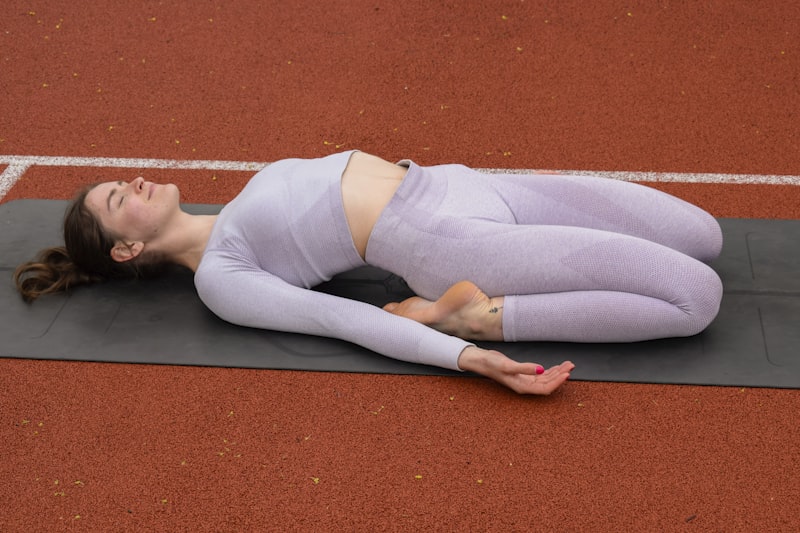
The twist is where stress goes to die. Spinal twists wring out tension the way you’d wring out a wet towel, creating space between the vertebrae and releasing deep muscles that are nearly impossible to reach any other way.
How to Do It
- Lie on your back with your arms extended out to the sides in a T shape, palms facing up.
- Draw both knees into your chest and give them a gentle hug.
- Keeping your knees together, slowly lower them to the right, toward the floor. Your left hip will lift — that’s natural.
- Turn your head to the left, away from your knees. This completes the twist through your entire spine.
- Keep both shoulder blades as close to the floor as you can. If your knees don’t reach the floor, that’s perfectly fine. You can place a pillow under them for support.
- Breathe deeply. With each exhale, see if you can release a little more into the twist.
- After 1-2 minutes, slowly bring your knees back to center and repeat on the other side.
What It Releases
Supine twists target the muscles of the lower back, the obliques, and the muscles between the ribs (intercostals). They also create a gentle massage effect on the internal organs, which can improve digestion — a system that is often disrupted by chronic stress. The open-arm position stretches the chest and shoulders, counteracting the hunched posture that comes from desk work and phone use.
Modifications
- If the twist feels too intense, don’t lower your knees all the way to the floor. Keep them at whatever height feels manageable.
- If your neck is uncomfortable turning, keep your head facing the ceiling instead.
- To deepen the twist, extend the top leg straight while keeping the bottom knee bent.
Putting It All Together: Your 10-Minute Sequence
Here’s how to flow through all five poses in about 10 minutes:
- Child’s Pose — 2 minutes
- Cat-Cow — 1.5 minutes
- Standing Forward Fold — 1.5 minutes
- Legs Up the Wall — 3 minutes
- Supine Spinal Twist — 1 minute per side
You can adjust the timing based on what your body needs. If your lower back is screaming, spend more time in Child’s Pose and Cat-Cow. If you’re mentally frazzled, prioritize Legs Up the Wall. Listen to your body — it’s been trying to tell you something.
Making This a Habit
The best time to do this sequence is whenever you need it most. But if you want it to become a consistent practice, anchor it to a specific part of your day:
- Morning: Do it right after waking to release the stiffness of sleep and set a calm tone for the day.
- Midday: Use it as a reset when the afternoon slump hits.
- Evening: Practice it 30 minutes before bed to downshift your nervous system and improve sleep quality.
You don’t need to do all five poses every time. Even one or two, done with intention and connected to your breath, will make a measurable difference in how you feel.
Your body has been carrying your stress for you. These 10 minutes are your way of saying thank you — and letting it rest.