

My most-used “I am” affirmation isn’t one I wrote. I borrowed it from a famous singer who has been saying it in interviews for years, and it’s become the sentence I repeat dozens of times a day without thinking.
“I am open and receptive to all the goodness and abundance the universe has to offer.”
At stop lights. In elevators. Under my breath while a build is running. Nobody around me knows I’m doing it. I don’t light a candle. Most of the time I’m staring at a laptop.
And it works. Which is the part most writing on “I am” affirmations won’t say out loud.
What “I Am” Actually Does
Most people treat “I am” statements like motivational quotes. Something you recite when your confidence is flagging, the way an athlete might tell themselves “you got this” before a race. That framing sells a lot of journals and rarely changes anything.
An “I am” statement operates on something different. Psychologists call the thing you’re editing the self-schema: the set of trait-level beliefs you carry about who you are. “I’m a runner.” “Money has never been my thing.” “Mornings aren’t for me.” Your self-schema is the filter your brain uses to decide what to notice and what to quietly ignore. The research on the neuroscience of positive thinking points to this over and over. Edit the schema, and the filter changes. Change the filter, and you start collecting different evidence about your own life.
That’s why “I am” matters more than “I will.” When you say “I will be confident,” your brain hears a future that hasn’t arrived and a present in which the thing isn’t true. Neville Goddard, whose mid-century lectures quietly shaped most of modern manifestation culture, put this better than anyone since:
“To feel ‘I will be’ is to confess ‘I am not.’ ‘I am’ is stronger.”
“I am” is a claim about who you are right now. Your brain takes that claim more seriously than any goal statement.

The Part Everyone Skips: Feeling
There’s a 2009 study by Joanne Wood at the University of Waterloo that every article on “I am” affirmations should cite, and almost none do. Wood had participants with low self-esteem repeat the line “I’m a lovable person” to themselves. The result was not inspirational. The people who needed the affirmation most felt worse after saying it. Their inner voice started arguing with the words. The gap between the sentence and how they actually felt became impossible to ignore, and the effort to close the gap made them more miserable than if they had said nothing.
The takeaway from Wood’s study is simple. The feeling behind the word is the real affirmation. Words alone are decoration.
If you say “I am abundant” while feeling broke, your brain registers the mismatch and treats the sentence as a lie. If you can say “I am open and receptive” and feel something actually loosen in your chest, you are doing an entirely different thing. Same grammar. Different effect. The difference is whether your nervous system signs the contract.
The singer I borrowed my line from has understood this for years. She repeats it in interviews like a quiet daily ritual, and she means it when she says it. That is where the work happens.
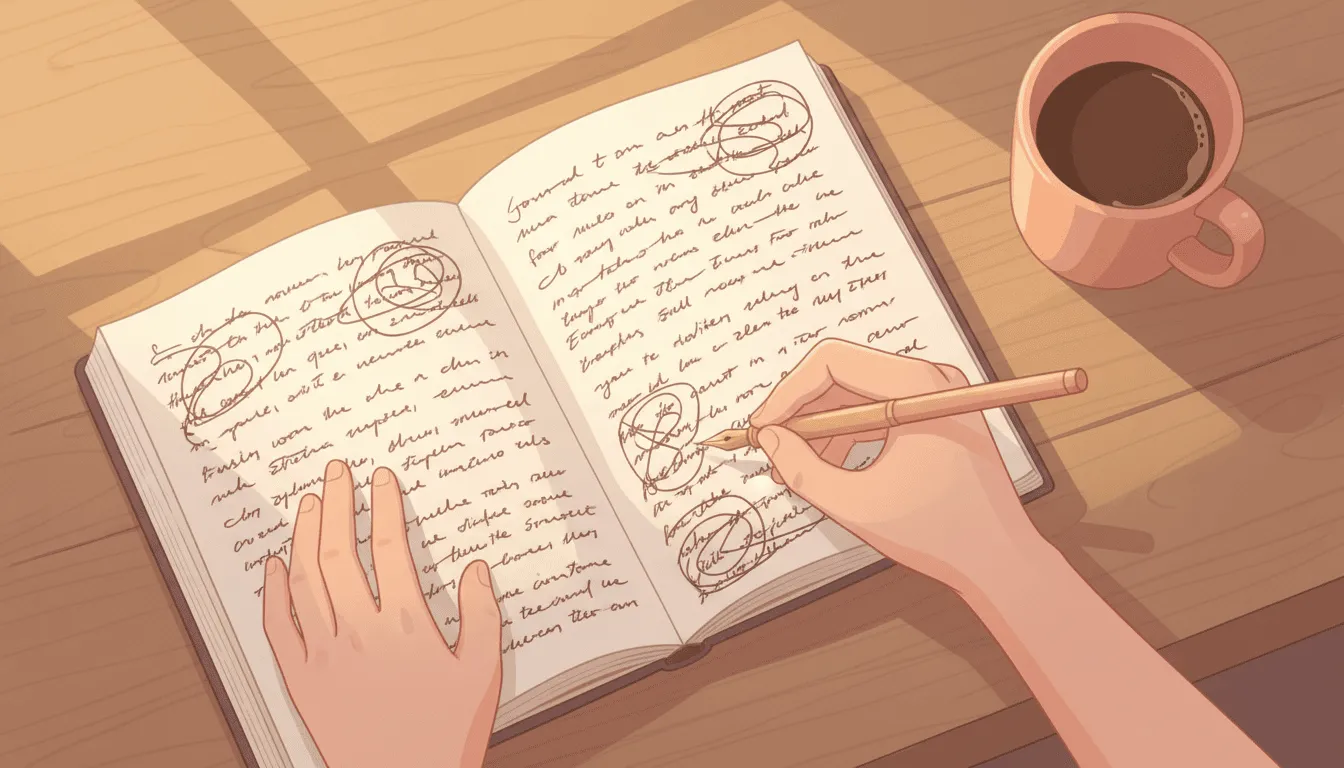
How Luna Found Me
A few months ago, my daughter Amy asked for a cat.
I started quietly affirming something like “the most beautiful cat is on her way into our family.” In the car. Walking to my desk. Never a ceremony, just a sentence I felt. I pictured her curled on the back of my couch, already there, already ours.
The next morning, a coworker of mine posted in a Slack channel at work. She’d found a cat on the street and was looking for someone to give her a home. One Slack message. I replied within the hour.
That cat is now named Luna, and she is growing beautifully. My daughter is obsessed with her. I am obsessed with her. She sits on the back of my couch exactly where I pictured her, which gives me a small shiver if I think about it too long.
I am not going to tell you that the affirmation summoned Luna into existence. I don’t believe that’s how any of this works. What I will tell you is that for the twenty-four hours between the sentence and the Slack post, I was walking around carrying a very particular feeling: she’s already mine. The moment I saw that message, I knew exactly what I was looking at. No deliberation. No second-guessing the timing or the responsibility. The answer was already in me before the question arrived.
That is the part Wood’s study quietly predicts and the part Goddard spent his life shouting about. When your felt state and your “I am” statement agree, the world starts returning things that look suspiciously like evidence.
The Rule I Actually Use
Over years of doing this, I’ve narrowed my own practice down to three rules I think are non-negotiable.
It has to be positive. No negations, no corrections, no phrasing that references what you don’t want. “I am calm and grounded” does something to your nervous system. “I am no longer anxious” keeps the word anxious spinning at the center of your attention. State what you want, not what you’re leaving.
You have to feel it, not just say it. If the sentence clashes with your felt reality, your brain rejects it and reinforces the clash. Trying harder or repeating louder won’t close that gap. Pick a sentence close enough to true that the feeling can rise to meet it. “I am becoming someone who trusts her judgment” is a legitimate step. “I am completely fearless” probably isn’t, not yet.
Your limits are your beliefs. If you secretly think the thing you want will take a long time, it will take a long time. If you quietly believe you don’t deserve it, the affirmation is just a lid sitting on top of that quieter sentence you already decided was true. The real work of affirmations is quietly refusing to keep agreeing with what you’ve already decided about who you are.
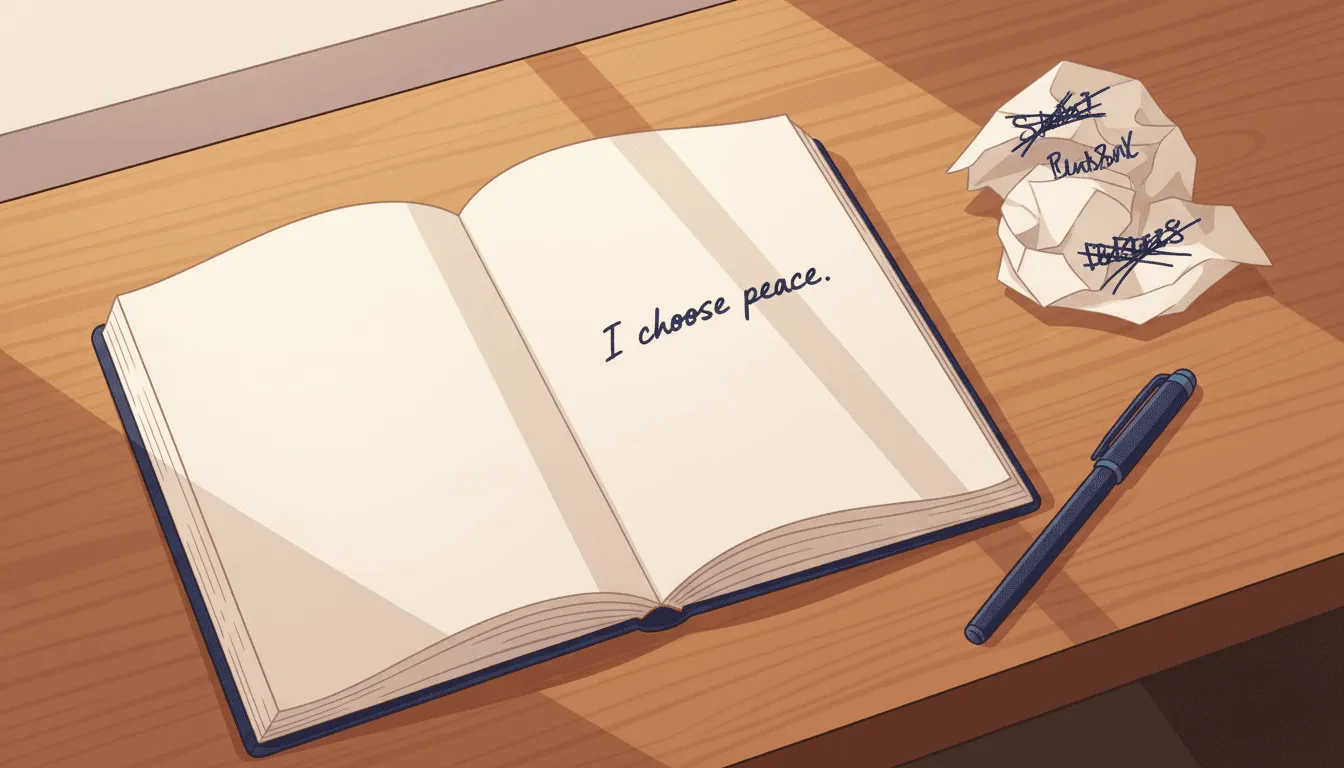
Writing One You Can Actually Feel
Pick something you can almost believe. Not the ceiling. The next step.
Borrow, if you need to. My borrowed line still works on me years later because when I say it, I can feel something soften. That’s the whole test. If saying your “I am” statement makes you feel more like yourself, not less, you’ve found the right one. If it makes you feel like a fraud, rewrite it closer to true until the feeling comes along for the ride.
A few starter sentences I’ve personally used or given to friends:
- “I am open and receptive to all the goodness and abundance the universe has to offer.”
- “I am becoming the kind of person my future self will thank me for being.”
- “I am safe, I am loved, and I already have what I need to begin.”
- “I am magnetic to the right people and opportunities for me right now.”
If you want scaffolding around the practice, pair your affirmation with something structured, like the 369 method or a 30-day morning affirmation guide. If you’d rather something remembered it for you, an app can carry the reminder. The structure matters less than the sentence. The sentence matters less than the feeling you bring to it.
She’s the Point
I’ll close with a photo of her, because she’s the reason I finally decided to write this.

I don’t have a clean scientific explanation for how Luna found us. What I have is a sentence I was saying under my breath and a Slack post that arrived the next morning. My daughter Amy believes in magic. Her father is trying very hard to believe in the thing in between magic and math.
What I know for certain is this, after years of saying sentences to myself in kitchens and elevators and parking lots. If you think the thing you want is far away, it will stay far away. If you can find a sentence that, when you say it, makes the thing feel like it’s already on its way, something in you quietly starts acting like the person who already has it. Your attention shifts. The way you carry yourself changes. Your willingness to say yes shifts. And then one morning a Slack post arrives, or an email, or a stranger says the exact right thing at the exact right time, and you reach for it without flinching because you’ve already been living inside the answer.
Pick one sentence. Make it positive, specific, and believable enough that your chest softens when you say it. Say it today. Say it tomorrow. Keep the ones that make you feel more like yourself and let the rest go.
That’s the whole practice. The words are just the way you get there.