
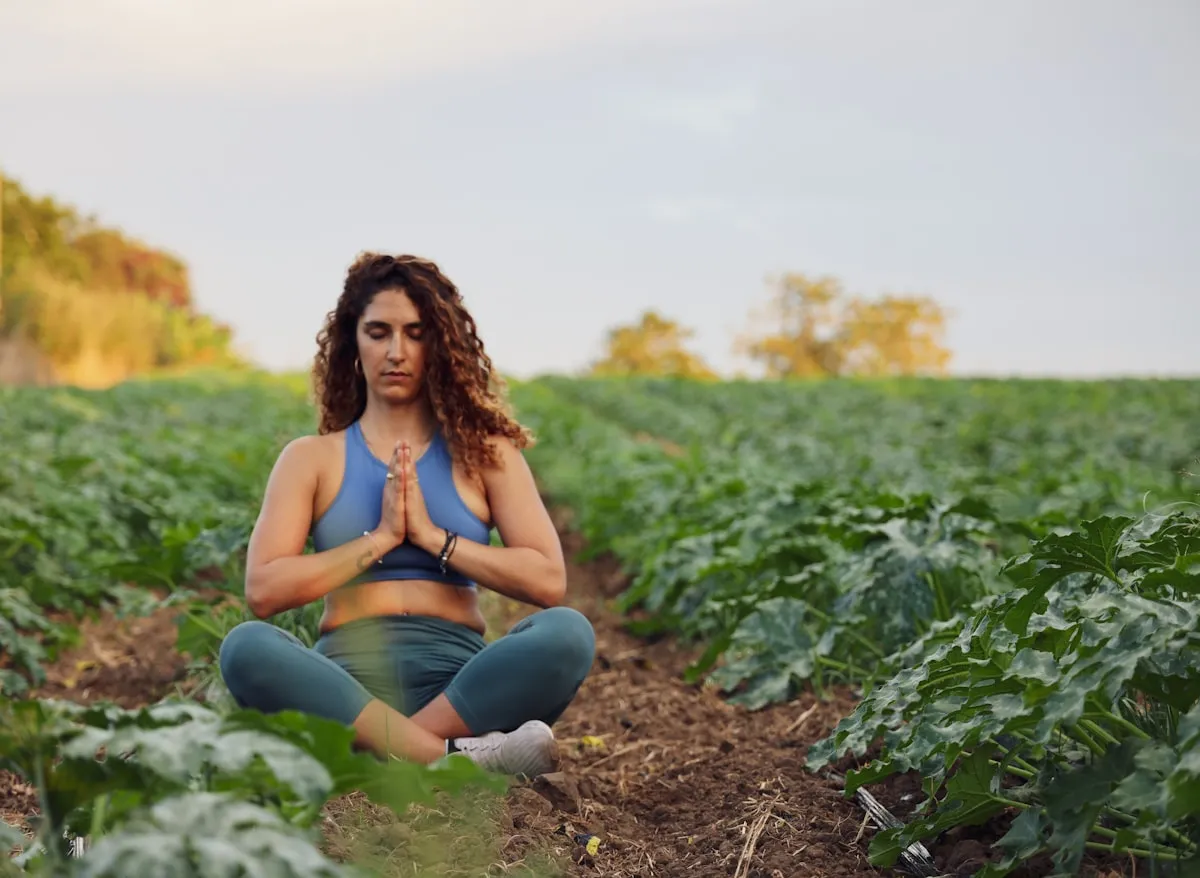
You’ve probably heard that meditation can reduce stress, sharpen your focus, and make you a calmer, more present human being. You’ve probably also tried it, lasted about ninety seconds, decided your brain was broken, and gone back to scrolling your phone.
You’re not alone. And your brain isn’t broken.
The truth is, meditation is one of the most misunderstood practices in the wellness world. The images we see — serene monks on mountaintops, perfectly still bodies in candlelit rooms — create an expectation that meditation is about achieving some blissful state of mental emptiness. It isn’t. And that misconception is the single biggest reason beginners give up before the practice ever has a chance to work.
This guide is going to strip away the mystique and give you something practical: three meditation techniques you can start using today, even if you’ve never sat still for more than a minute in your life.
Let’s Debunk a Few Myths First
Myth: You have to stop thinking. This is the big one. Meditation is not about emptying your mind. Your brain produces thoughts the way your lungs produce breath — it’s what it does. Meditation is about changing your relationship to those thoughts. Instead of getting swept away by every mental current, you learn to observe thoughts without attaching to them. You notice them, and you let them pass.
Myth: You need to sit in a specific position. You don’t need to sit cross-legged on the floor. You can meditate sitting in a chair, lying down, standing up, or even walking. The only requirement is that your body is in a position where you can remain relatively still and comfortable.
Myth: You need a lot of time. Five minutes is enough. Truly. Research from Johns Hopkins University found that even short daily meditation sessions produce measurable changes in brain structure and stress response. You don’t need an hour. You need consistency.
Myth: It should feel peaceful immediately. Your first few sessions might feel frustrating, boring, or uncomfortable. That’s completely normal. You’re asking your mind to do something it’s not used to doing — sitting with itself without distraction. The discomfort is part of the process, not a sign that you’re doing it wrong.
“The goal of meditation isn’t to control your thoughts — it’s to stop letting them control you.”
What You Need to Get Started
Almost nothing. That’s the beauty of it.
- A quiet-ish space. It doesn’t need to be silent. A corner of your bedroom, a parked car, a bench in the park — anywhere you won’t be interrupted for a few minutes.
- A timer. Your phone works fine. Set it and forget it so you’re not constantly wondering how much time has passed.
- Comfortable clothing. Nothing that pinches, pulls, or distracts.
- An open mind. This is the most important one.
That’s it. No special cushion, no incense, no app subscription required.
Technique 1: Breath Focus Meditation

This is the most fundamental meditation technique, and it’s where I recommend every beginner starts. It is simple, portable, and surprisingly powerful.
How to Do It
-
Find your position. Sit comfortably with your back straight but not rigid. You can sit in a chair with your feet flat on the floor, or on the floor with a cushion under you. Rest your hands on your knees or in your lap.
-
Close your eyes or soften your gaze. If closing your eyes feels uncomfortable, simply lower your gaze to a spot on the floor a few feet in front of you.
-
Bring your attention to your breath. Don’t try to change it. Don’t breathe deeply or slowly on purpose — just notice the natural rhythm of your inhale and exhale. Feel the air entering your nostrils, filling your chest, expanding your belly, and then releasing.
-
Choose an anchor point. This is the specific physical sensation you’ll focus on. It might be the feeling of air at the tip of your nose, the rise and fall of your chest, or the expansion of your belly. Pick one and stay with it.
-
When your mind wanders — and it will — gently return. This is the entire practice. You notice that you’ve drifted into thought, and without judgment, you bring your attention back to your breath. That moment of noticing is not failure. It is the meditation. Every time you catch yourself and return, you are strengthening your attention muscle.
-
Start with 5 minutes. Set a gentle timer. When it goes off, take a moment before opening your eyes. Notice how your body feels. Notice the quality of your thoughts.
Why It Works
Breath focus meditation activates your parasympathetic nervous system — the “rest and digest” mode that counteracts your stress response. Within minutes, your heart rate begins to slow, your blood pressure drops, and your cortisol levels decrease. Over time, this practice literally changes the structure of your amygdala, the brain’s fear center, making it less reactive to stressors.
Technique 2: Body Scan Meditation
If you carry tension in your body — tight shoulders, clenched jaw, knots in your stomach — body scan meditation is particularly effective. It teaches you to notice physical sensations you’ve been ignoring and consciously release the tension you’ve been holding.
How to Do It
-
Lie down or sit comfortably. For this technique, lying on your back with your arms at your sides is ideal, but sitting works too.
-
Take three deep breaths to settle in. Inhale through your nose, exhale through your mouth. Let each exhale be a little longer than the inhale.
-
Bring your attention to the top of your head. Simply notice what you feel there. Tingling? Pressure? Warmth? Nothing at all? There’s no right answer. Just observe.
-
Slowly move your attention downward. From your scalp to your forehead, your eyes, your jaw, your neck. Take your time. Spend at least a few breaths on each area.
-
When you find tension, breathe into it. This sounds abstract, but try it: imagine your inhale flowing directly into the tight area. On the exhale, imagine the tension dissolving, melting, releasing. You’ll be surprised how often this actually works.
-
Continue down through your entire body. Shoulders, arms, hands, fingers, chest, belly, hips, thighs, knees, calves, feet, toes. Let nothing go unnoticed.
-
Finish with a full-body awareness. After you’ve scanned every region, expand your attention to feel your body as a whole. Notice the overall sensation of being alive in your body, right now, in this moment.
Why It Works
Body scan meditation leverages the mind-body connection that we so often ignore. Emotional stress manifests physically — we clench our jaws when we’re anxious, hunch our shoulders when we’re overwhelmed. By systematically releasing physical tension, you also release the emotional weight attached to it. Research published in JAMA Internal Medicine found that body scan meditation significantly reduced symptoms of anxiety and depression in participants who practiced it regularly.
Technique 3: Guided Visualization
This technique is a bit different from the first two. Rather than focusing on your breath or body, you use your imagination to create a vivid mental scene that promotes relaxation, healing, or insight.
Visualization is powerful because your brain doesn’t fully distinguish between a vividly imagined experience and a real one. The same neural pathways fire whether you’re actually walking through a peaceful forest or deeply imagining it.
How to Do It
-
Settle into your position and close your eyes. Take a few deep breaths to ground yourself.
-
Choose your scene. A beach at sunset. A quiet forest path. A cozy room with a fire. A vast, open meadow. Pick something that feels inherently calming to you.
-
Build the scene with all five senses. Don’t just “see” it — hear the waves, smell the pine needles, feel the warmth of the sun on your skin, taste the salt in the air. The more senses you engage, the more real the experience becomes to your brain.
-
Stay in the scene. Explore it. Walk through it. Let it unfold naturally. If your mind wanders into everyday thoughts, gently guide it back to the scene.
-
Add an intention if you’d like. Some people use visualization to rehearse a future event — imagining themselves succeeding in a job interview, for example, or having a difficult conversation with grace. This is where visualization becomes a tool not just for relaxation but for genuine personal transformation.
The Revision Technique
One particularly compelling form of visualization comes from the work of Neville Goddard, a mid-twentieth-century teacher who taught that imagination is the gateway to reshaping your experience of reality. His revision technique involves replaying a past event in your mind — but changing it. You don’t deny that the original event happened. Instead, you vividly reimagine how you wish it had unfolded, engaging all your senses and emotions as you do.
The purpose isn’t self-deception. It’s about releasing the emotional charge of negative past experiences so they stop shaping your present behavior. When you revise a painful memory — replaying it with a different, more empowering outcome — you weaken the neural pathway associated with the original pain and begin building a new one associated with peace, resolution, or strength.
This practice pairs well with journaling. After a visualization or revision session, writing down what you experienced can help solidify the insights and emotional shifts. If this approach resonates with you, the Remise app is designed specifically around the revision technique, providing guided prompts and a journaling space to process and integrate your reflections.
Why Visualization Works
A study from the Cleveland Clinic Foundation found that participants who mentally rehearsed a physical exercise increased their muscle strength by 13.5% — without ever moving a muscle. The brain’s motor cortex activated in the same patterns during imagined exercise as during actual exercise. If visualization can build physical strength, imagine what it can do for your emotional resilience, confidence, and sense of inner peace.
Building Your Practice: Practical Tips
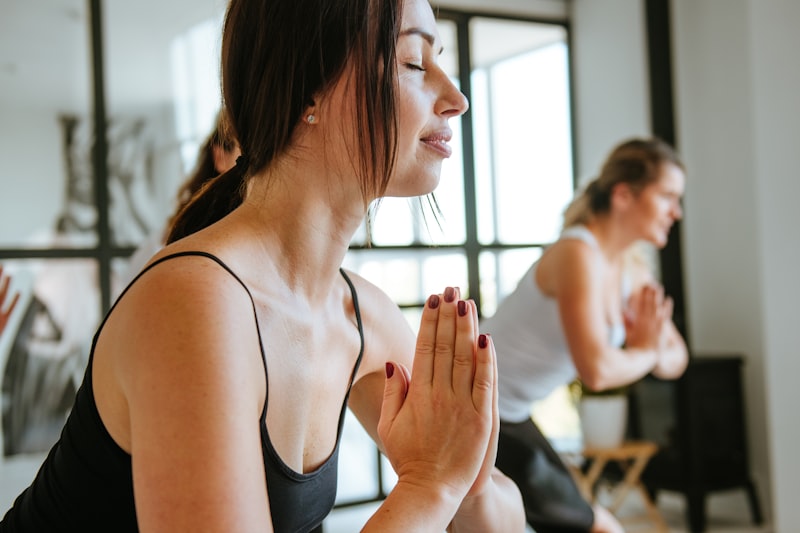
Start absurdly small. Three minutes. Not thirty. Not even ten. Three. You can build from there, but the most important thing in the beginning is that you actually do it. A three-minute meditation you complete is infinitely more valuable than a thirty-minute meditation you skip.
Same time, same place. Habits stick when they have cues. Meditate in the same spot, at the same time, ideally anchored to an existing habit. “After I pour my coffee, I meditate for five minutes” is more effective than “I’ll meditate sometime today.”
Don’t judge your sessions. There is no such thing as a bad meditation. A session where your mind wandered constantly is still valuable — you practiced the skill of noticing and returning. That skill translates directly into everyday life: noticing when you’re spiraling into worry, and gently redirecting your attention.
Track your practice, not your progress. Put a checkmark on a calendar for each day you meditate. Don’t rate the sessions. Don’t analyze them. Just show up and mark the day. The streak itself becomes motivating.
Be patient with yourself. The benefits of meditation are cumulative. You might not feel dramatically different after one week. But after a month of consistent practice, most people report sleeping better, reacting less impulsively, feeling more present in conversations, and experiencing a general sense of groundedness that wasn’t there before.
When Meditation Feels Hard
There will be days when sitting still feels impossible. Days when your thoughts are a hurricane and every minute feels like ten. Those are actually the days when meditation matters most.
On difficult days, try this: instead of fighting the storm in your mind, just name it. “Thinking.” “Worrying.” “Planning.” Give the mental activity a label, and then return to your breath. The simple act of naming what’s happening creates a sliver of space between you and the thought. In that space lives your freedom.
You don’t need to conquer your mind. You just need to befriend it.
And that starts with showing up, sitting down, and breathing. Today. Right now, if you’re ready.
Five minutes. That’s all it takes to begin.